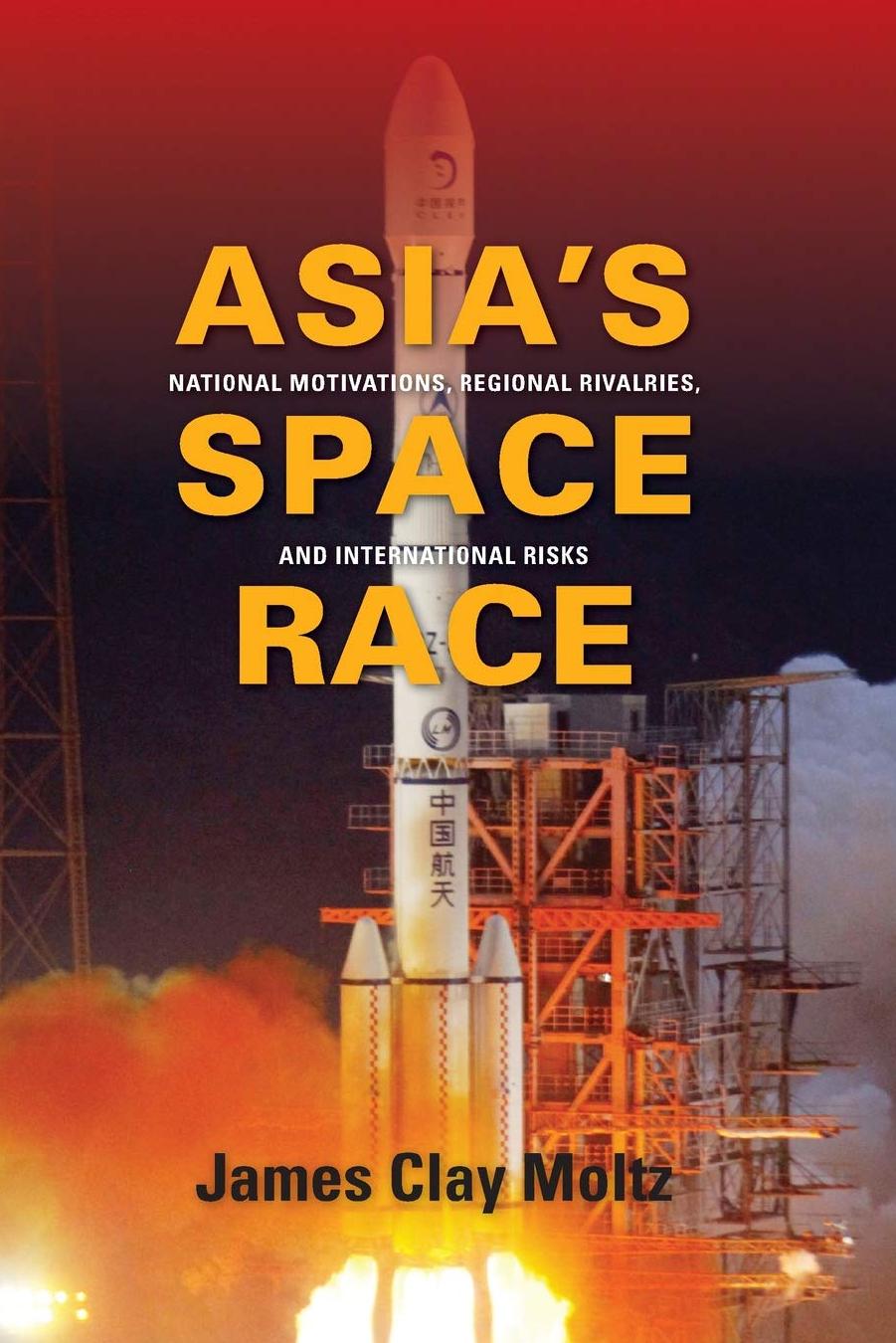
Asia's Space Race: National Motivations, Regional Rivalries, and International Risks by James Clay Moltz
Author:James Clay Moltz [Moltz, James Clay]
Language: eng
Format: epub, pdf
Tags: International Relations, Political Science, General
ISBN: 9780231156882
Google: qDHzklHooiYC
Goodreads: 13149896
Publisher: Columbia University Press
Published: 2011-01-15T06:29:22+00:00
CHAPTER FIVE
THE SOUTH KOREAN SPACE PROGRAM
Emerging from Dependency
Although China, India, and Japan have received the bulk of recent attention for their space developments, the emergence of the Republic of Korea (ROK, or South Korea) as a new player has arguably been even more dynamic over the past two decades. From having virtually no space capability, organizational structure, or overall plan as late as the early 1990s, South Korea has engaged in a major effort to enter the arena of spacefaring nations. As Doo Hwan Kim argues, âKorea is attempting to achieve fast-track development in the space race,â despite its late starting date.1 Although its strategy focused initially on purchases of foreign technology, the ROK has increasingly sought to develop independent capabilities as a satellite producer, space services provider, and space-launching country. In this sense, South Korea is finally emerging from its long dependency on the United States for space-derived information. But Seoulâs dual desire for both technological advancement and eventual autonomy has not prevented it from continuing to cooperate with the United States and with other countries to serve its purposes, including Russia, France, India, Israel, Japan, and even China.
In this regard, the ROKâs position within the Asian space world has been perhaps the most politically âbalancedâ among the developed programs. It has sought to maintain ties with a range of countries both to push its technology forward and to prevent its possible isolation. Perhaps this behavior stems from an uncertainty about which way to turn, toward Chinaâits largest trading partnerâor the United States, its main ally but a country that has denied it space and launcher technology for many years. These ties are now on the mend, but it is striking that Seoul only succeeded in reaching its first cooperative agreement with NASA in 2008, decades after similar U.S. arrangements with other allies (and even some adversaries, such as the Soviet Union/Russia). Still, in its current position, Seoul may represent a possible hub or âpivotâ2 for the future development of broader regional space cooperation.
South Korea is a smaller country in terms of size, finances, and population than other major Asian spacefaring nations. Lacking the resources of a large power, it has adopted a more integrative strategy concerning its Asian neighbors. As the space politics analyst Wade Huntley observes, the larger space programs âtend to see the other important powers as rivals, if not adversaries,â3 whereas smaller countries like South Korea âlook at the world differently.â4 For them, âthe key is to develop relationships,â5 since they are less capable of going it alone in overcoming the high entry costs to entering the space field.
Developing a space program has represented a major national challenge for South Korea, a country that was forced to rebuild itself and its economy both after World War II and the Korean War. Seoul has pursued the goal of space activity with considerable state-led investment and the rousing of nationalism, as it has in other fields seen as critical by the government. Although its attempts to orbit
Download
Asia's Space Race: National Motivations, Regional Rivalries, and International Risks by James Clay Moltz.pdf
This site does not store any files on its server. We only index and link to content provided by other sites. Please contact the content providers to delete copyright contents if any and email us, we'll remove relevant links or contents immediately.
Personalized inhaled bacteriophage therapy for treatment of multidrug-resistant Pseudomonas aeruginosa in cystic fibrosis by unknow(214937)
CONSORT 2025 statement: updated guideline for reporting randomized trials by unknow(102522)
Critical evaluation of the ProfiLER-02 study design and outcomes by Vivek Subbiah & Razelle Kurzrock(102048)
Cardiac gene therapy makes a comeback by Oliver J. Müller & Susanne Hille & Anca Kliesow Remes(101839)
Whisky: Malt Whiskies of Scotland (Collins Little Books) by dominic roskrow(74621)
Unveiling the design rules for tunable emission in graphene quantum dots: A high-throughput TDDFT and machine learning perspective by Şener Özönder & Mustafa Coşkun Özdemir & Caner Ünlü(51003)
A yeast-based oral therapeutic delivers immune checkpoint inhibitors to reduce intestinal tumor burden by unknow(40375)
Covalent hitchhikers guide proteins to the nucleus by Alexander F. Russell & Madeline F. Currie & Champak Chatterjee(40297)
Meet the Authors: Christopher R. Mansfield and Emily R. Derbyshire by Christopher R. Mansfield & Emily R. Derbyshire(40210)
Alkaline-earth metals promote propane dehydrogenation with carbon dioxide through geometric effects: Altering the reaction pathway by unknow(32815)
Induced iron vacancies boosting FeOOH loaded on sustainable Fenton-like collagen fiber membrane for efficient removal of emerging contaminants by unknow(32612)
Efficient electric-field-assisted photochemical conversion of methane to n-propanol exclusively over penetrated TiO2Ti hollow fibers by Guanghui Feng(32531)
Bi2SiO5 nanosheets as piezo-photocatalyst for efficient degradation of 2,4-Dichlorophenol by Hangyu Shi & Yifu Li & Lishan Zhang & Guoguan Liu & Qian Zhang & Xuan Ru & Shan Zhong(32470)
A novel NDIPTA organic heterojunction photocatalyst with built-in electric field for efficient hydrogen production by Jiahui Yang & Baojun Ma & Yongfa Zhu(32444)
Enhanced conversion of methane to liquid-phase oxygenates via hollow ferrite nanotube@horseradish peroxidase based photoenzymatic catalysis by Jun Duan & Shiying Fan & Xinyong Li & Shaomin Liu(32406)
Ordered macroporous superstructure of defective carbon adorned with tiny cobalt sulfide for selective electrocatalytic hydrogenation of cinnamaldehyde by Xiao-Shi Yuan & Sheng-Hua Zhou & San-Mei Wang & Wenbo Wei & Xiaofang Li & Xin-Tao Wu & Qi-Long Zhu(32335)
What's Done in Darkness by Kayla Perrin(27262)
Topological analysis of non-conjugated ethylene oxide cored dendrimers decorated with tetraphenylethylene: Insights from degree-based descriptors using the polynomial approach by A Theertha Nair & D Antony Xavier & Annmaria Baby & S Akhila(26632)
Investigation of mechanical and self-healing properties of hydroxyl-terminated polybutadiene functionalized with 2-ureido-4-pyrimidinone by Mohsen Kazazi & Mehran Hayaty & Ali Mousaviazar(26556)
